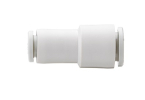
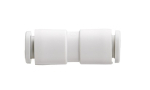
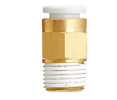
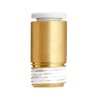
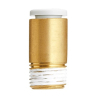
TPU04, TECHNOLINE, straight fitting for Ø4mm tube
TPU04, TECHNOLINE, straight fitting for Ø4mm tube. Straight connection of two tubes; suitable for extending a pneumatic route without a thread.
Rate 24,43 CZK per 1 EUR. Prices are indicative, invoicing is in Czech crowns.
Straight push-in fittings for joining two tubes in one axis or a tube to a thread. Choose by tube diameter.
TPU04, TECHNOLINE, straight fitting for Ø4mm tube. Straight connection of two tubes; suitable for extending a pneumatic route without a thread.
TPU06, TECHNOLINE, straight fitting for Ø6mm tube. Straight connection of two tubes; suitable for extending a pneumatic route without a thread.
TPU08, TECHNOLINE, straight fitting for Ø8mm tube. Straight connection of two tubes; suitable for extending a pneumatic route without a thread.
TPU10, TECHNOLINE, straight fitting for Ø10mm tube. Straight connection of two tubes; suitable for extending a pneumatic route without a thread.
TPU12, TECHNOLINE, straight fitting for Ø12mm tube. Straight connection of two tubes; suitable for extending a pneumatic route without a thread.
TBPU04, TECHNOLINE, straight all-metal fitting for Ø4mm tube. Straight connection of two tubes; suitable for extending a pneumatic route without a thread. Metal body.
TPU03C, TECHNOLINE, miniature straight fitting for Ø3mm tube. Straight connection of two tubes; suitable for extending a pneumatic route without a thread. Miniature version.
TBPU06, TECHNOLINE, straight all-metal fitting for Ø6mm tube. Straight connection of two tubes; suitable for extending a pneumatic route without a thread. Metal body.
TPU04C, TECHNOLINE, miniature straight fitting for Ø4mm tube. Straight connection of two tubes; suitable for extending a pneumatic route without a thread. Miniature version.
TPU06C, TECHNOLINE, miniature straight fitting for Ø6mm tube. Straight connection of two tubes; suitable for extending a pneumatic route without a thread. Miniature version.
TBPU08, TECHNOLINE, straight all-metal fitting for Ø8mm tube. Straight connection of two tubes; suitable for extending a pneumatic route without a thread. Metal body.
TPU16, TECHNOLINE, straight fitting for Ø16mm tube. Straight connection of two tubes; suitable for extending a pneumatic route without a thread.
TBPU10, TECHNOLINE, straight all-metal fitting for Ø10mm tube. Straight connection of two tubes; suitable for extending a pneumatic route without a thread. Metal body.
TBPU12, TECHNOLINE, straight all-metal fitting for Ø12mm tube. Straight connection of two tubes; suitable for extending a pneumatic route without a thread. Metal body.
KQ2N04-99, SMC, plug-in connecting stem, 2× stem Ø4mm. A plug-in connecting stem connecting existing push-in fittings, not loose tubes.
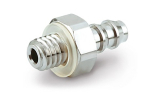
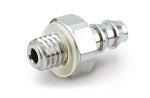
M-3AU-4, SMC, straight fitting with hose barb, thread M3, tube Ø4mm. A hose barb fitting for a soft tube; it is not a standard push-in collet.
M-5AU-4, SMC, straight fitting with hose barb, thread M5, tube Ø4mm. A hose barb fitting for a soft tube; it is not a standard push-in collet.
KQ2H02-04A, SMC, straight fitting, tube Ø2mm, male R1/2. Straight connection of the tube to threaded port R1/2; the thread seal must be verified.
KQ2N06-99, SMC, plug-in connecting stem, 2× stem Ø6mm. A plug-in connecting stem connecting existing push-in fittings, not loose tubes.
KQ2H06-00A, SMC, straight fitting, 2× tube Ø6mm. Straight connection of two tubes; suitable for extending a pneumatic route without a thread.
KQ2H04-00A, SMC, straight fitting, 2× tube Ø4mm. Straight connection of two tubes; suitable for extending a pneumatic route without a thread.
KQ2N04-06, SMC, plug-in connecting stem, stem reducer Ø4mm↔Ø6mm. A plug-in connecting stem connecting existing push-in fittings, not loose tubes.
KQ2S04-M3G, SMC, straight fitting with internal hexagon, tube Ø4mm, male M3. Straight connection of the tube to threaded port M3; the thread seal must be verified.
KQ2S04-M6A, SMC, straight fitting with internal hexagon, tube Ø4mm, male M6. Straight connection of the tube to threaded port M6; the thread seal must be verified.
KQ2S06-M5A, SMC, straight fitting with internal hexagon, tube Ø6mm, male M5. Straight connection of the tube to threaded port M5; the thread seal must be verified.
Prices include the recycling fee.
A straight fitting is a suitable starting shape where you want to route the connection in one axis. However, when selecting, distinguish between connecting two tubes and a transition between a tube and a threaded port. The public range includes standard, miniature and all-metal Pneuflex versions and several SMC series. The word straight alone is therefore not enough to order the counterpart.
Pneuflex describes the PU family as a coaxial connection of two tubes with the same outer diameter. SMC states KQ2H06-00A among straight fittings for two tubes with an outer diameter of 6 mm.
For your own selection sheet, create two columns. In each, determine the interface type and size; add the full designation for the thread. Only then compare the material version and documented operating conditions of the specific item. If one interface has a different size, continue via Reducing fittings. If you need to change direction right at the port, also assess Elbow fittings.
Our own decision question is: should the fitting remain loose between two lines, or does it need a fixed place in the structure? For a fixed pass-through, the relevant branch is Bulkhead fittings. Do not try to decide only on the basis of a photo or the colour of the release ring. You need a drawn interface, the available space and an idea of which part of the assembly you will change later.
When repairing a damaged section, mark which parts of the line should remain and which you will replace. Inserting a new piece between preserved ends is a different assembly than replacing the whole line between the original connections. Compare both variants by access, number of new connections and the possibility of future replacement. Prepare the length sketch for the selected variant before ordering parts.
For the mounting plan, distinguish the length of cut pieces, the length of the fitting body and the lengths hidden inside the connection. These quantities have different measurement origins. Therefore mark the faces and reference points in the sketch. I suggest carrying out your own check first on one sample assembly: compare the design dimensions with the actual arrangement and verify the space for service. When measuring, also take into account the routing of the line in the planned holders.
Let us consider two separate pieces of model tube 100 and 140 mm long. The hypothetical fitting has a length of 30 mm between the faces and we consider an insertion of 12 mm on each side. The total length from the free end of the first tube to the free end of the second is 100 + 140 + 30 − 12 − 12 = 246 mm. The inputs are our own assumptions, not dimensions of the offered product. If we subtracted the insertion only once, the design would differ by 12 mm. The example shows the importance of common reference points; for an actual fitting, use the data from its drawing.
Plan the work for a safely secured system without pressure in the affected section. As part of your own acceptance, compare the position of the fitting before and after routing the line. Record whether both pieces connect naturally in one axis, or whether the holders force a lateral offset. In diagnostics, separate a fault of one tube end from a problem of the threaded connection. Carry out the comparison test under the same conditions and record what actually changed after each change.
Pneuflex for PU describes inserting the tube directly into the fitting; pressing the release collet is used for removal. Verify access to this operation even after both lines are fixed.
Draw the actual line axes in the design. Choose a straight shape only after verifying that the required route can be assembled without forced deflection at the connection.
Compare the whole assembly including access to both ends. Dimensional savings are of practical importance when they preserve the planned mounting and later replacement of the line.
We need technical cookies for the cart and checkout to work — these are always used. Analytics cookies show us which pages people look for and where they get lost, and help us improve the shop. We only use them if you allow it. More in the data processing policy.
Choose which cookies we may use. You can change your choice at any time.
They keep the cart contents, your login and selected language, and protect forms from abuse. An order cannot be completed without them, so they are used even without consent.
Google Analytics shows us traffic and behaviour on the website in aggregated form. This tells us which pages are not working for people. We do not identify anyone from this data.