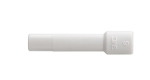
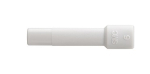
TPP04, TECHNOLINE, plug-in plug for push-in port, Ø4mm stem for push-in port
TPP04, TECHNOLINE: plug-in plug for push-in port. Ø4mm stem for push-in port. Use in pneumatic distribution and verified mounting criteria.
Rate 24,43 CZK per 1 EUR. Prices are indicative, invoicing is in Czech crowns.
Blanking plugs for closing unused threaded ports and push-in connections. Choose by thread or tube diameter.
TPP04, TECHNOLINE: plug-in plug for push-in port. Ø4mm stem for push-in port. Use in pneumatic distribution and verified mounting criteria.
TPP06, TECHNOLINE: plug-in plug for push-in port. Ø6mm stem for push-in port. Use in pneumatic distribution and verified mounting criteria.
TPP08, TECHNOLINE: plug-in plug for push-in port. Ø8mm stem for push-in port. Use in pneumatic distribution and verified mounting criteria.
TPP10, TECHNOLINE: plug-in plug for push-in port. Ø10mm stem for push-in port. Use in pneumatic distribution and verified mounting criteria.
TSPIM-G01, TECHNOLINE: threaded plug with internal hexagon. male thread G1/8, closing a hole, TSPIM version. Use in pneumatic distribution and verified mounting criteria.
TPP12, TECHNOLINE: plug-in plug for push-in port. Ø12mm stem for push-in port. Use in pneumatic distribution and verified mounting criteria.
TSPIM-G02, TECHNOLINE: threaded plug with internal hexagon. male thread G1/4, closing a hole, TSPIM version. Use in pneumatic distribution and verified mounting criteria.
TSPHM-G01, TECHNOLINE: threaded plug with internal hexagon. male thread G1/8, closing a hole, nickel-plated brass, NBR O-ring. Use in pneumatic distribution and verified mounting criteria.
TSPIM-G03, TECHNOLINE: threaded plug with internal hexagon. male thread G3/8, closing a hole, TSPIM version. Use in pneumatic distribution and verified mounting criteria.
TSPPM-G01, TECHNOLINE: threaded plug with external hexagon. male thread G1/8, closing a hole, TSPPM version. Use in pneumatic distribution and verified mounting criteria.
TSPHM-G02, TECHNOLINE: threaded plug with internal hexagon. male thread G1/4, closing a hole, nickel-plated brass, NBR O-ring. Use in pneumatic distribution and verified mounting criteria.
TSPIM-G04, TECHNOLINE: threaded plug with internal hexagon. male thread G1/2, closing a hole, TSPIM version. Use in pneumatic distribution and verified mounting criteria.
TSPPM-G02, TECHNOLINE: threaded plug with external hexagon. male thread G1/4, closing a hole, TSPPM version. Use in pneumatic distribution and verified mounting criteria.
TSPHM-G03, TECHNOLINE: threaded plug with internal hexagon. male thread G3/8, closing a hole, nickel-plated brass, NBR O-ring. Use in pneumatic distribution and verified mounting criteria.
TSPHM-G04, TECHNOLINE: threaded plug with internal hexagon. male thread G1/2, closing a hole, nickel-plated brass, NBR O-ring. Use in pneumatic distribution and verified mounting criteria.
TSPPM-G03, TECHNOLINE: threaded plug with external hexagon. male thread G3/8, closing a hole, TSPPM version. Use in pneumatic distribution and verified mounting criteria.
TSPPM-G04, TECHNOLINE: threaded plug with external hexagon. male thread G1/2, closing a hole, TSPPM version. Use in pneumatic distribution and verified mounting criteria.
TSPPM-G06, TECHNOLINE: threaded plug with external hexagon. male thread G3/4, closing a hole, TSPPM version. Use in pneumatic distribution and verified mounting criteria.
TSPPM-G08, TECHNOLINE: threaded plug with external hexagon. male thread G1, closing a hole, TSPPM version. Use in pneumatic distribution and verified mounting criteria.
KQ2P-04, SMC: push-in port plug. Ø4mm. Use in pneumatic distribution and verified mounting criteria.
KQ2P-08, SMC: push-in port plug. Ø8mm. Use in pneumatic distribution and verified mounting criteria.
KQ2P-06, SMC: push-in port plug. Ø6mm. Use in pneumatic distribution and verified mounting criteria.
KQ2C04-00A, SMC: plug for open tube end. Ø4mm. Use in pneumatic distribution and verified mounting criteria.
KQ2P-12, SMC: push-in port plug. Ø12mm. Use in pneumatic distribution and verified mounting criteria.
KQ2P-10, SMC: push-in port plug. Ø10mm. Use in pneumatic distribution and verified mounting criteria.
Prices include the recycling fee.
The listing includes the designations TPP, TSPIM, TSPHM, TSPPM and SMC KQ2P or KQ2C. For correct selection, first determine what is to be closed: a threaded hole, the push-in socket of a fitting, or the end of a tube. Compare the description of the ordered part with the drawing of the actual counterpart.
Manufacturing example Pneuflex PP shows a solid push-in shank inserted into another push-in fitting. It is not inserting a plug into the inner bore of a tube. In this design, release is done by pressing the release ring of the fitting. Therefore assess the outer dimension of the inserted part and the method of its retention together.
A different example is Pneuflex SPIM, which closes a counterpart with a female thread and uses an internal hexagon for the tool. Pneuflex SPPM has a hexagonal head for a spanner. The manufacturing sheets list several thread systems; the same verbal size designation is therefore not yet a complete specification of the connection.
We recommend compiling an order record with three separate items: full designation of the counterpart, interface according to its drawing and available space for the tool. For a push-in point, draw the position of the release ring. For a threaded point, mark access to the plug head. This way, a part that would not be accessible for dismantling after surrounding components are assembled can be detected before ordering.
The SPIM and SPPM examples show that mounting access must be planned according to the position of the working hexagon. Inside the hole you need space to insert the tool, around the external head space for a spanner. The different head is not just a visual detail. The chosen tool must correspond to the place through which the manufacturer assumes the mounting torque is transmitted.
Let us consider only a model closure, not a specific plug sold. Let us assume a uniform overpressure of 6 bar and a circular effective area with a diameter of 8 mm. The area is π × 8² / 4 ≈ 50.3 mm². Since six bar corresponds to 0.6 N/mm², the resulting pressure force is F = p × A ≈ 30.2 N.
With a model increase of the effective diameter to 12 mm, we get an area of 113.1 mm² and a force of 67.9 N. The diameter increased by half, but the force to 2.25 times. The calculation uses the pressure difference on both sides of the closure. Neither the thread diameter nor the number on the bag can automatically be used as the effective diameter. The model does not determine the permissible load, tightening torque or safety reserve of the product.
For your own service record, we recommend drawing the location of the detected leak and attaching a photo of the interface after safe shutdown and depressurisation. Separate observations at the circumference of the push-in socket, at the threaded joint and at another point of the assembly. For each step, record the part used and the changed condition. Before reordering, add the full code of the part used and the designation of the counterpart to the record. A photo without dimensions can capture the appearance, but does not replace identification of the interface. For a recurring fault, compare the same points in the assembly so that changing the plug does not hide a cause not yet determined. Do not consider a mere match of the trade name as proof of a correct connection.
For the described PP, the push-in interface of the fitting is decisive. Therefore include the counterpart in the selection, not just the size of the tube brought into the surrounding distribution.
Mark each closed point in the diagram, assign it the counterpart drawing and the required access. After changing the branching, also check the continuity with Flow control valves a Silencers.
We need technical cookies for the cart and checkout to work — these are always used. Analytics cookies show us which pages people look for and where they get lost, and help us improve the shop. We only use them if you allow it. More in the data processing policy.
Choose which cookies we may use. You can change your choice at any time.
They keep the cart contents, your login and selected language, and protect forms from abuse. An order cannot be completed without them, so they are used even without consent.
Google Analytics shows us traffic and behaviour on the website in aggregated form. This tells us which pages are not working for people. We do not identify anyone from this data.