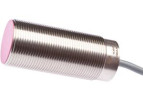
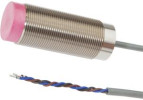
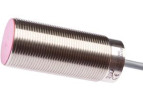
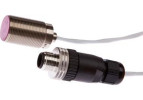
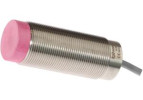
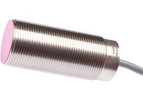
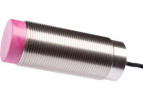
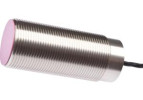
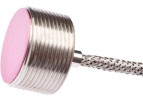
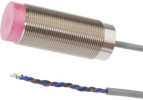
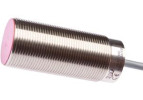
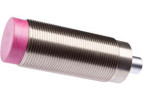
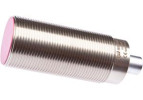
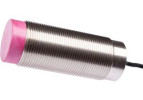
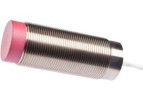
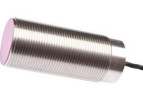
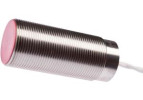
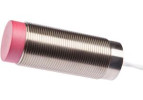
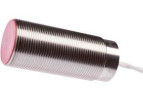
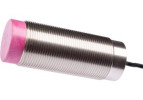
High-temperature inductive sensors operate at temperatures above the usual 70 °C – at furnaces, presses, dryers and forming machines. Choose by the operating temperature of the head, cable and connector and by the required range.
IN3001T2 from IPF is a high-temperature inductive sensor. M30, Sn 15 mm, 10–35 V DC, PNP, NO, PTFE cable 10 m, 3 wires.
On request
376,39 €
excl. VAT · 455,44 € incl. VAT
Prices include the recycling fee.
High-temperature inductive sensors: selection and mounting
A high-temperature inductive sensor detects metal contactlessly in an environment whose temperature exceeds the capabilities of a standard design. It is used on heated fixtures, drying equipment and machines with thermally stressed mounting. The temperature of the entire connected assembly and the switching stability during the work cycle are decisive.
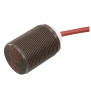
LANBAO LR18X, high-temperature series. Source: LANBAO, manufacturer. Original product image from the manufacturer. Check dimensions and connection according to the order code.
Which temperature to actually compare
The temperature of the conveyed part need not be the same as the temperature of the sensor. The head can be heated by radiation, hot air and heat conduction through a metal bracket. Therefore determine the temperature at the mounting location after the machine has stabilised and during the hottest part of the cycle. A measurement taken only at start-up may hide gradual heating.
Part of the assembly
What to check
Sensing head and electronics
Permitted operating temperature and any separation of the head from the evaluation part.
Cable
Temperature range of the sheath, bending point and routing around hot surfaces.
Connector and mating connector
Range of both parts, sealing and the conditions stated for the prescribed connection.
Mounting bracket
Heat transfer into the body and the space needed for natural cooling.
Distinguish between continuous operation, permitted short-term load and storage temperature. The storage figure does not permit switching while powered. At the same time, check the temperature limitation at the required output load; limit values from different catalogue lines cannot be combined automatically.
A specific example of the LANBAO series
For the high-temperature series LR18X the manufacturer states an operating range of −25 to +120 °C, power supply 10–30 V DC and variants with cable or connector. The stated range belongs to this series. Before ordering, compare the complete order code, data sheet and parameters of the mating connector.
Working gap and shift of the switching point
A change in temperature affects the electronics as well as the dimensions of the machine. Expansion of the bracket can shift the target relative to the active face, even though the sensor is operating within its permitted range. Do not set the gap right at the limit of the rated sensing distance Sn. Use the assured switching distance Sa stated for the given conditions and leave a mechanical reserve against contact.
Illustrative example: at the location is 95 °C. The head is suitable up to 120 °C, but the cable mating connector only up to 80 °C. The assembly as a whole is not suitable. The solution may be a suitable mating connector and lead, a change of connection position or a different sensor design. The figures illustrate the decision-making, they are not parameters of the lead shown.
Verification during commissioning
Measure the temperature of the body, lead and connector at steady machine load.
Check switching on and off with the actual metal part when cold and when hot.
Test the limit positions of the target, mechanism play and the fastest work cycle.
Compare the indicator status with the PLC input status; also monitor the power supply and input filter.
Record the working gap, temperatures and order code for future replacement.
A heat shield or a change of bracket may help, but confirm their benefit by measurement. The modification must not violate the required free space in front of the face or the rules for flush or non-flush mounting.
FAQ
Can a standard inductive sensor detect a hot part?
Yes, provided that the temperature of the sensor itself and all connected components remains within their permitted range. The temperature of the target alone does not determine the suitability of the assembly.
Is it enough to replace the cable with a silicone one?
Only if the head, electronics, connector and other materials are also suitable. Changing the cable does not raise the temperature limit of the electronics.
Why does the sensor switch when cold but miss when hot?
Check the actual temperature, the shift of the target due to thermal expansion, the working gap reserve and the power supply. Replacing it with a higher temperature series will not by itself remove faulty mounting geometry.
For a specific selection, prepare the material and dimensions of the target, the working gap, the environmental conditions and the required electrical connection. An overview can be found in the categories Special sensors and Inductive sensors.
Technical documents:LANBAO: LANBAO LR18X, high-temperature series. This guide helps with selection; binding parameters, wiring and mounting are defined by the documentation of the ordered model.
Cookies on this website
We need technical cookies for the cart and checkout to work — these are always used. Analytics cookies show us which pages people look for and where they get lost, and help us improve the shop. We only use them if you allow it. More in the data processing policy.
Cookie settings
Choose which cookies we may use. You can change your choice at any time.
Technical cookies
Always active
They keep the cart contents, your login and selected language, and protect forms from abuse. An order cannot be completed without them, so they are used even without consent.
Analytics cookies
Google Analytics shows us traffic and behaviour on the website in aggregated form. This tells us which pages are not working for people. We do not identify anyone from this data.