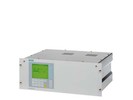
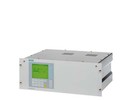
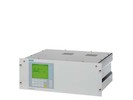
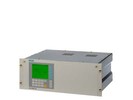
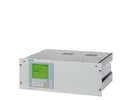
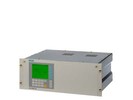
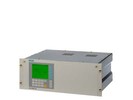
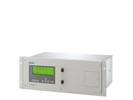
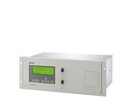
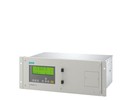
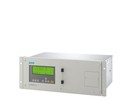
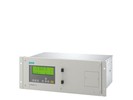
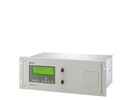
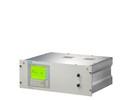
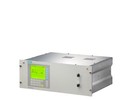
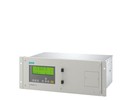
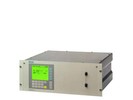
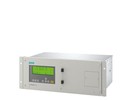
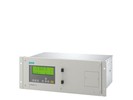
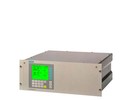
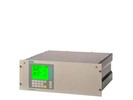
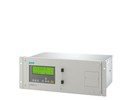
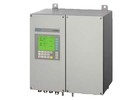
Siemens gas analysers
A gas analyser is chosen for a certain component in a certain environment, not just according to the highest concentration on the display. When specifying, state the measured gas, all significant accompanying components, water content, pressure and expected changes in composition. A device calibrated for one mixture may not correctly evaluate another, even though the monitored concentration is within the same range.
The range includes OXYMAT 61, OXYMAT 6 and OXYMAT 64, as well as ULTRAMAT 6/6E, ULTRAMAT 23 and CALOMAT 6. Individual order codes represent different configurations; a common trade name does not mean identical gas paths, ranges, pump or calibration equipment.
The measuring principle determines suitability for the application
OXYMAT 61 uses the paramagnetic properties of oxygen and compares the sample with a reference gas. For this series, the manufacturer's manual excludes the measurement of flammable, toxic and corrosive gases. The whole sample is assessed, not just the oxygen itself.
OXYMAT 64 measures trace oxygen with a zirconia cell. Catalytically active and inactive versions are not the same in terms of cross-sensitivities. Flammable admixtures can consume oxygen on the hot sensor and thus change the indication; even the inactive variant does not mean zero influence of all accompanying gases.
U ULTRAMAT 23 the measuring channels and additional sensors are selected according to the configuration; infrared measurement cannot be interchanged with the oxygen channel. Radiation absorption is tied to the respective molecule and spectral region, so several monitored components require appropriate equipment.
CALOMAT 6 for H2 in N2 represents measurement using thermal conductivity. The result depends on the properties of the mixture: a change in the accompanying gas can create a signal similar to a change in the monitored concentration. The specification must therefore also include the composition of the base gas mixture and possible impurities, not just the required hydrogen range.
Series in the catalogue
Compare the separate branches OXYMAT 61, OXYMAT 6E, OXYMAT 64, ULTRAMAT 6F, ULTRAMAT 6E, ULTRAMAT 23 and CALOMAT 6E. Always confirm the permissible medium and equipment for the complete order code, not just by the subcategory name.
The sample must represent the process
Start with the sampling point. A dead branch, a leaking joint or ingress of ambient air can spoil even a stable-looking reading. At low oxygen concentrations, ingress of air can be particularly significant. Sample preparation must limit unsuitable particles and condensation without removing the measured component or changing its proportion in the mixture. The choice of cooling, filtration or heating is therefore part of the measuring task.
For a service specification, prepare the complete order code, sampling diagram, actual flow rates and pressure conditions. At the same time, determine where the used sample goes and how any calibration gases are safely discharged. A low measured concentration of one component does not in itself rule out the hazardousness of the whole mixture.
Distinguish between concentration in wet and dry gas. Removing water changes the basis to which the proportion of other components refers. Comparison with a laboratory result makes sense only after unifying conditions and units. For pressure monitoring of the sampling, you can continue to the category Pressure sensors; however, the permissible inlet pressure of the analyser is always determined by its specific version.
Model calculation: sample transport
Consider an empty sampling tube 10 m long with an inner diameter of 4 mm. Its geometric volume is V = π × 0.002² × 10 = 0,000126 m³, approximately 0.126 litres. At a volumetric flow rate of 0.5 l/min, referenced to the same conditions, the ideal transport time V/Q is about 15 seconds. This is only a model: the volumes of fittings, sample conditioning and the measuring cell, mixing and the device's own response are added. The result is not a guaranteed alarm time.
FAQ
Does calibration eliminate the influence of all other gases?
No. Calibration verifies the response under known conditions. A variable interfering component needs separate assessment; a correction based on a constant background fails if this background changes. For the calibration mixture, therefore, record the composition, uncertainty, validity and supply conditions.
Is an analyser automatically a detector for personal protection?
No. Process analysis and safety detection are different tasks. Suitability for a protective function or explosive atmosphere must be documented for the specific device and installation. For related measurements and the design of the whole assembly, continue to the overview Process Sensors.