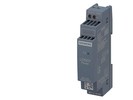
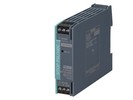
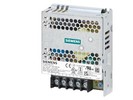
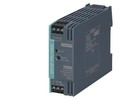
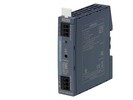
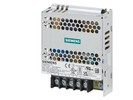
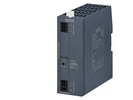
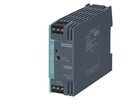
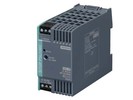
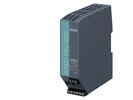
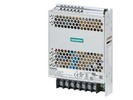
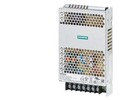
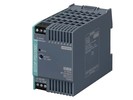
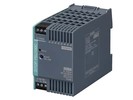
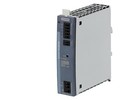
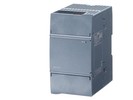
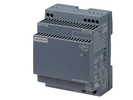
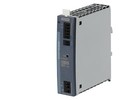
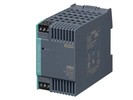
Siemens power supplies
This branch is not limited to a single voltage or design series. Catalogue items include, for example, 6EP3331-6SB00-0AY0, 6EP1333-1LB00, 6EP1436-2BA10 and 6EP3311-6SB00-0AY0 for 5 V DC. When selecting, distinguish the complete order code: a similar beginning of the name does not confirm the same mains supply or mounting.
Output voltage and type of supply
A regulated power supply converts the input to the required DC voltage. However, belonging to Siemens alone does not mean that it is a power module for every PLC system. Verify whether the equipment needs an external supply or a system power supply designed for a specific bus.
For 6EP1436-2BA10, the manufacturer states a three-phase rated input of 400–500 V AC and an output of 24 V DC, 20 A; see the Siemens data sheet. These data cannot be transferred to smaller power supplies with the same output voltage. Changing the mains supply is a substantial design change, not just a replacement with higher power.
Power applies under specified conditions
The LOGO!Power manual states the load conditions by type and points out the current limitation when the output voltage is increased. Data sheet 6EP3331-6SB00-0AY0 specifies a derating of 2 % per kelvin at an ambient temperature of +55 to +70 °C. This is not a common characteristic of all Siemens power supplies.
When checking the installation, start from the correct drawing: support rail or mounting surface, dimensions, clearances and space at the terminals. The same power does not mean the same fixing. Before mechanical replacement, confirm the specific version and the necessary mounting accessories. Also include the cabling in the used depth of the enclosure; the dimension of the metal or plastic housing alone is not enough.
Model example of separate voltage branches
Assume a load of 5 V / 2 A and another load of 24 V / 1 A. The total useful power is 10 + 24 = 34 W, but this sum does not mean that both devices can be connected to a single 24V output. A separate suitable branch or a correctly designed DC/DC converter is needed. The figures are model values, not a recommendation of a specific Siemens assembly.
With an assumed converter efficiency of 90 %, the 10W branch requires approximately 11.1 W at the input, i.e. 0.46 A at 24 V. A common 24V power supply would thus supply approximately 1.46 A continuously, even before assessing start-up and derating. Counting only the original 34 W would neglect the conversion loss. Also assess the required separation of the individual circuits.
Frequently asked questions and mistakes when replacing
Are the same 24 V and more amps enough?
No. Check the network type, protection and inrush current, overload behaviour, required SELV/PELV and mounting. The connected conductors and terminals have their own current capacity, which a stronger power supply will not increase.
Can I eliminate the voltage drop on a long cable by increasing the voltage?
Only after verifying all loads, the permissible setting and the power limit. First recalculate the wiring; a nearby load may be exposed to a higher voltage than a distant one. The general procedure and the distinction between continuous consumption and peaks are given in the guide Power supplies.