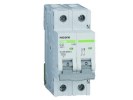
Ex9BN 1P C10, NOARK, miniature circuit breaker 1P, 10A, characteristic C, Icn 6kA
Ex9BN 1P C10, NOARK: miniature circuit breaker 1P, 10A, characteristic C; breaking capacity Icn 6kA according to EN 60898-1.
Kurs 24,39 Kč za 1 EUR. Ceny są orientacyjne, rozliczenie następuje w koronach czeskich.
Miniature circuit breakers and residual current devices for protecting electrical circuits and people. The range includes MCBs with B, C and D characteristics, DC circuit breakers, RCDs and combined RCBOs. Choose by rated current, number of poles, characteristic and breaking capacity.
Ex9BN 1P C10, NOARK: miniature circuit breaker 1P, 10A, characteristic C; breaking capacity Icn 6kA according to EN 60898-1.
Ex9BN 1P C16 NOARK – circuit breaker 1-pole, 16A, characteristic C, 6 kA, 100098, 16 A. Key data: NOARK Ex9BN. Exact technical data for selecting the miniature circuit breaker type.
Ex9BN 1P B1, NOARK, miniature circuit breaker 1P, 1A, characteristic B, Icn 6kA. Single-pole circuit breaker Ex9BN with characteristic B and current 1A for protecting AC circuits against overload and…
Ex9BN 1P B4 NOARK – circuit breaker 1-pole, 4A, characteristic B, 6 kA, 100003, 1P, 4 A. Key data: NOARK Ex9BN. Exact technical data for selecting the miniature circuit breaker type.
EKM1-63H-1P+N-04A/B, CHANGAN, Miniature circuit breaker 1P+N, 4A, characteristic B, 10kA. This circuit breaker of the EKM1-63H series protects the circuit against overcurrent and short circuit.
EKM1-63DCH-1P-01A/C, CHANGAN, DC circuit breaker 1P, 1A, characteristic C, 250VDC, 10kA. DC circuit breaker EKM1-63DCH for protecting a 250VDC circuit with rated current 1A and characteristic C.
DC circuit breaker CHANGAN EKM1-63DCH-1P-03A/C: 1P, 3A, characteristic C, up to 250VDC, short-circuit breaking capacity 10kA. For DIN rail.
EKM1-63DCH-1P-05A/C, CHANGAN, DC circuit breaker 1P, 5A, characteristic C, 250VDC, 10kA. DC circuit breaker EKM1-63DCH for protecting a 250VDC circuit with rated current 5A and characteristic C.
Ex9BN 1P C4 NOARK – circuit breaker 1-pole, 4A, characteristic C, 6 kA, 100093, 1P, 4 A. Key data: NOARK Ex9BN. Exact technical data for selecting the miniature circuit breaker type.
Ex9BN 1P C1 NOARK – circuit breaker, 100090, 1 A, C, 6 kA. Key data: NOARK Ex9BN, 1A. Exact technical data for selecting the miniature circuit breaker type.
EKM1-63H-3P-16A/C, CHANGAN, Miniature circuit breaker 3P, 16A, characteristic C, 10kA. This circuit breaker of the EKM1-63H series protects the circuit against overcurrent and short circuit.
1SM310B Sigma Elektrik – circuit breaker 3-phase, 10 A, characteristic B, breaking capacity 10 kA, (10A/B/3f). Key data: 1SM. Exact technical data for selecting the miniature circuit breaker type.
1SM204C Sigma Elektrik – two-pole circuit breaker, 4A, characteristic C, 10kA, (4A/C/2f), 4 A, 10 kA. Key data: 1SM. Exact technical data for selecting the miniature circuit breaker type.
EKM1-63-1P+N-04A/B, CHANGAN, Miniature circuit breaker 1P+N, 4A, characteristic B, 6kA. This circuit breaker of the EKM1-63 series protects the circuit against overcurrent and short circuit.
EKM1-63-1P+N-10A/B CHANGAN – circuit breaker 2-pole, 1P+N, 10A, characteristic B, 6kA, 2 (1P+N), 10 A. Key data: EKM1-OF. Exact technical data for selecting the miniature circuit breaker type.
EKM1-63H-3P-16A/B, CHANGAN: miniature circuit breaker 3P/16A with tripping characteristic B and declared breaking capacity 10kA.
Ex9BN 2P C4, NOARK: miniature circuit breaker 2P, 4A, characteristic C; breaking capacity Icn 6kA according to EN 60898-1.
Ex9BN 3P B16, NOARK, miniature circuit breaker 3P, 16A, characteristic B, 6kA. Miniature circuit breaker Ex9BN protects single-phase or three-phase branches according to the number of poles 3P.
Ex9BN 3P B10 NOARK – circuit breaker 3-pole, 10A, characteristic B, 6 kA, 100051, 3P, 10 A. Key data: NOARK Ex9BN. Exact technical data for selecting the miniature circuit breaker type.
Ex9BN 3P B32 NOARK – circuit breaker 3-pole, 32A, characteristic B, 6 kA, 100056, 3P, 32 A. Key data: NOARK Ex9BN. Exact technical data for selecting the miniature circuit breaker type.
Ex9BN 3P B6 NOARK – circuit breaker 3-pole, 6A, characteristic B, 6 kA, 100049, 3P, 6 A. Key data: NOARK Ex9BN. Exact technical data for selecting the miniature circuit breaker type.
Ex9BN 3P C10, NOARK: miniature circuit breaker 3P, 10A, characteristic C; breaking capacity Icn 6kA according to EN 60898-1.
Ex9BN 3P C32 NOARK – circuit breaker 3-pole, 32A, characteristic C, 6 kA, 100146, 3P, 32 A. Key data: NOARK Ex9BN. Exact technical data for selecting the miniature circuit breaker type.
Ex9BN 3P C16 NOARK – circuit breaker 3-pole, 16A, characteristic C, 6 kA, 100143, 3P, 16 A. Key data: NOARK Ex9BN. Exact technical data for selecting the miniature circuit breaker type.
Ex9BN 3P B4 NOARK – circuit breaker 3-pole, 4A, characteristic B, 6 kA, 100048, 3P, 4 A. Key data: NOARK Ex9BN. Exact technical data for selecting the miniature circuit breaker type.
Ceny zawierają opłatę recyklingową.
Choose circuit breakers and residual current devices according to the faults that the specific circuit must handle safely. The figure in amps, the number of modules or the appearance of the toggle are not a complete brief. The design links the power source, wiring, loads and fault conditions. This category helps distinguish protective functions and prepare data for professional selection; it does not replace the design or verification of the installation.
An MCB circuit breaker responds to overcurrent. A residual current device RCCB on its own monitors residual current and has no overcurrent protection of its own. A combined RCBO joins both functions. The distinction is also confirmed by the Schneider Electric technical explanation. The designation “RCD” is therefore not enough: for the specific device, verify whether it is an RCCB or RCBO and how the downstream protection is arranged.
For each offer, read the data sheet for the exact order code. Data taken from another size or a related series may look credible but may not apply to the product being assessed. Unclear data must be resolved before the device is included in the project, not only during its installation.
The rated current In describes the current size of the device. The tripping characteristic of a circuit breaker expresses its response to overcurrent as a function of time. Breaking capacity refers to interrupting the short-circuit current under specified conditions. For an RCD, the rated residual operating current IΔn is also important. Each value answers a different question; a higher number by itself does not mean more suitable protection.
Add the voltage, AC or DC use, number and function of poles, type of residual sensitivity and environmental conditions to the comparison. Separately check coordination with the upstream protection. Selectivity cannot be confirmed by simply comparing two rated currents; request documentation for the specific combination.
The model list contains three devices marked 16 A: a circuit breaker, an RCD alone and a combined RCBO. The match of this number does not make them replacements. The purchase table must have separate columns “protective function”, “voltage”, “poles”, “characteristic” and “residual sensitivity”. An empty mandatory cell means missing documentation, not assumed conformity.
Before ordering, check the module space, connection terminals, compatibility of the busbar and any auxiliary contact. Entrust mounting, measurement and commissioning to a qualified person. After the protection trips, record the circumstances: the load being switched on, the operating time and other loads started at the same time. Repeated switching on without finding the cause or arbitrarily increasing the current value is not a solution to the fault.
An RCCB on its own is not. The required protective functions must be provided by a correctly designed assembly or a corresponding combined device.
A photo of the whole rating plate, the full code, the circuit diagram and data on the supply and load. Also attach the requirements for coordination of protection and the reason for replacement. The same width is not enough to confirm interchangeability.
Techniczne pliki cookies są potrzebne do działania koszyka i zamówienia — są używane zawsze. Analityczne pliki cookies pokazują nam, których stron ludzie szukają i gdzie się gubią, i pomagają nam ulepszać sklep. Użyjemy ich tylko wtedy, gdy na to pozwolisz. Więcej w zasadach przetwarzania danych.
Wybierz, których plików cookies możemy używać. Wybór możesz w każdej chwili zmienić.
Przechowują zawartość koszyka, logowanie i wybrany język oraz chronią formularze przed nadużyciem. Bez nich nie można złożyć zamówienia, dlatego są używane także bez zgody.
Usługa Google Analytics pokazuje nam ruch i zachowanie na stronie w formie zbiorczej. Dzięki temu wiemy, które strony nie działają dla ludzi. Na podstawie tych danych nikogo nie identyfikujemy.