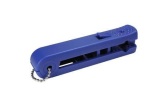
Cutting pliers, knives
Tube preparation starts with a cut that preserves its shape and creates a straight end face. SMC TK cutter documentation links a supported square cut with limiting leaks caused by faulty cutting. Therefore, choose the tool according to the material and outer diameter of the tube, not just the size of the handles.
The listing includes TC-02, TK-2 and TK-6. These items are different tools; do not combine their ranges or maintenance methods into one common parameter. When preparing the workplace, write down which tubes you will actually cut and how often the individual sizes alternate.
What to compare before ordering
SMC manufacturer's table states for TK-2 an outer diameter of up to 18 mm and for TK-6 up to 16 mm. TK-6 has a replaceable blade. These are data for specific models; they cannot be transferred to other cutters or to the ability to cut any material.
For your own selection, prepare a sample of the exact tube and its material information. Verify it against the tool's list of permissible materials. For repeated production, add a requirement for a spare blade and its availability. For a service kit, assess whether one tool covers all planned diameters, or whether you need two clearly marked tools.
From sketch to mounting length
First determine between which points the length is measured. The distance between the faces of the fittings may not be the resulting length of the stock piece. From the connection drawings, add the prescribed insertion of both ends and decide whether it is already included in the route dimension. Use the same convention in all items of the bill of materials.
If you are preparing several branches, mark them before shortening. We suggest a working table with three columns: branch designation, finished length and number of pieces. Compare the first prepared piece with the sketch and intended routing. Only after this check, repeat cutting the whole series.
Model calculation of stock material consumption
The tutorial example assumes twelve identical branches. For each, we consider 380 mm between the connection faces and a model insertion of 15 mm at each end. The cutting length is 380 + 15 + 15 = 410 mm; in total 12 × 410 = 4920 mm.
From a hypothetical five-metre piece, 80 mm remains before any trimming of the start and other losses. None of the stated values is a parameter of the offered fitting, tube or cutter. The example shows why mounting allowances should be calculated before cutting and why the full nominal length of stock cannot automatically be used.
Cut check and diagnostics
Before cutting a connected line, release the residual pressure. SMC mounting instructions require an undamaged circumference and a square cut; a slanted or flattened end face can cause leakage or insufficient connection. Check the ends before insertion.
As our own check procedure, we recommend placing a defective and a satisfactory sample side by side. Record whether the defect recurs on the same material, after a change of size, or independently of the tube. Then verify correct seating and the condition of the blade according to the tool instructions. This distinguishes an operator problem, unsuitable use and the need for maintenance.
When selecting the stock material, the following apply Polyurethane PU tubes a Teflon tubes. Their material must correspond to the intended use of the selected tool.
FAQ
Is it enough that the tube fits between the jaws?
No. Also verify the material and permitted outer diameter in the documentation of the specific tool.
Does a new cut solve every leak?
The cut is only one check item. During acceptance, separately verify the correctness of the selected connection and the mounting.