Phone +420 774 723 123 Cart · 0 · empty

Power Supplies

Power supplies for automation, control cabinets and machines – 5, 12, 24 and 48 V DC switched-mode supplies for DIN rail and panel mounting from MEAN WELL, Siemens, Omron, Balluff, IDEC and others. Choose by output voltage and current with reserve, supply network, dimensions and operating temperature.

Subcategories

Filters
Found 330 products

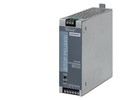
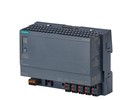
6EP3134-0TA00-0AY0, Siemens SITOP PSU3400 – DC/DC converter 24 V DC → 24 V DC / 10 A

Cat. no.: 6EP3134-0TA00-0AY0

6EP3134-0TA00-0AY0 Siemens SITOP PSU3400 is an industrial DC/DC converter converting 24 V DC to 24 V DC / 10 A. Designed for machines and control cabinets where the available DC voltage needs to be…

On request
168,08 €
excl. VAT · 203,37 € incl. VAT

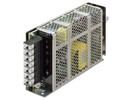
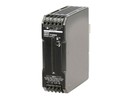
S8FS-G15005CD OMRON – power supply S8FS-G, 150 W, 5 V DC / 21 A

Cat. no.: S8FS-G15005CD

S8FS-G15005CD OMRON is an industrial power supply of the S8FS-G. series with a power of 150 W, an output of 5 V DC and a rated current of 21 A. Version: Built-in / DIN. Supply / phase: 1f…

On request
168,38 €
excl. VAT · 203,74 € incl. VAT

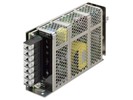
S8FS-G15012CD OMRON – power supply S8FS-G, 150 W, 12 V DC / 13 A

Cat. no.: S8FS-G15012CD

S8FS-G15012CD OMRON is an industrial power supply of the S8FS-G. series with a power of 150 W, an output of 12 V DC and a rated current of 13 A. Version: Built-in / DIN. Supply / phase: 1f…

On request
168,38 €
excl. VAT · 203,74 € incl. VAT

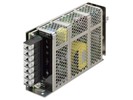
S8FS-G15015CD OMRON – power supply S8FS-G, 150 W, 15 V DC / 10 A

Cat. no.: S8FS-G15015CD

S8FS-G15015CD OMRON is an industrial power supply of the S8FS-G. series with a power of 150 W, an output of 15 V DC and a rated current of 10 A. Version: Built-in / DIN. Supply / phase: 1f…

On request
168,38 €
excl. VAT · 203,74 € incl. VAT

S8FS-G15024CD-500 OMRON – power supply S8FS-G, 150 W, 24 V DC / 6.5 A

Cat. no.: S8FS-G15024CD-500

S8FS-G15024CD-500 OMRON is an industrial power supply of the S8FS-G. series with a power of 150 W, an output of 24 V DC and a rated current of 6.5 A. Version: Built-in / DIN. Supply / phase: 1f…

On request
168,38 €
excl. VAT · 203,74 € incl. VAT

S8FS-G15048CD OMRON – power supply S8FS-G, 150 W, 48 V DC / 3.3 A

Cat. no.: S8FS-G15048CD

S8FS-G15048CD OMRON is an industrial power supply of the S8FS-G. series with a power of 150 W, an output of 48 V DC and a rated current of 3.3 A. Version: Built-in / DIN. Supply / phase: 1f…

On request
168,38 €
excl. VAT · 203,74 € incl. VAT

6EP3343-0SA00-0AY0, Siemens SITOP PSU3600 flexi – adjustable power supply 3–52 V DC / max. 10 A (max. 120 W)

Cat. no.: 6EP3343-0SA00-0AY0

6EP3343-0SA00-0AY0 Siemens SITOP PSU3600 flexi is an adjustable industrial power supply with an output of 3–52 V DC / max. 10 A (max. 120 W). Designed for test, measurement and industrial…

On request
169,54 €
excl. VAT · 205,14 € incl. VAT

6EP1433-0AA00, Siemens SITOP PSU300E – regulated power supply 24 V DC / 5 A

Cat. no.: 6EP1433-0AA00

6EP1433-0AA00 Siemens SITOP PSU300E is a regulated power supply with an output of 24 V DC / 5 A and a version for three-phase AC input. Designed for automation equipment, machines and control…

On request
173,19 €
excl. VAT · 209,56 € incl. VAT

S8VK-T12024 OMRON – power supply S8VK-T, 120 W, 24 V DC / 5 A

Cat. no.: S8VK-T12024

S8VK-T12024 OMRON is an industrial power supply of the S8VK-T. series with a power of 120 W, an output of 24 V DC and a rated current of 5 A. Version: Three-phase DIN power supply. Supply / phase…

On request
173,57 €
excl. VAT · 210,02 € incl. VAT

6EP7133-6AE00-0BN0, Siemens SIMATIC ET 200SP PS – regulated power supply 24 V DC / 10 A

Cat. no.: 6EP7133-6AE00-0BN0

6EP7133-6AE00-0BN0 Siemens SIMATIC ET 200SP PS is a regulated power supply with an output of 24 V DC / 10 A and a version for single-phase AC input. Designed for ET 200SP decentralised I/O solutions…

On request
174,65 €
excl. VAT · 211,33 € incl. VAT

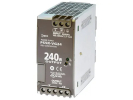
PS5R-VG24, IDEC, switched-mode DIN-rail power supply, 240W, 24VDC/10A

Cat. no.: PS5R-VG24

PS5R-VG24, IDEC – compact switched-mode power supply of the PS5R-V series for DIN rail, 240W, 24VDC/10A, input 100–240VAC. Width 60mm. For PLCs, HMIs, sensors, relays and other industrial automation…

On request
176,54 €
excl. VAT · 213,62 € incl. VAT
OUR TIP

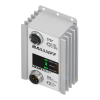
BAE00EP, BALLUFF, power supply 24VDC/3.8A, 91.2W, IP67, Heartbeat

Cat. no.: BAE00EP

BAE00EP BALLUFF is an industrial power supply 24VDC/3.8A with a power of 91.2W. Version: IP67, flange mounting. Suitable for industrial automation, machines and control cabinets.

On request
177,86 €
excl. VAT · 215,20 € incl. VAT
OUR TIP

BAE00ER, BALLUFF, power supply 24VDC/3.8A, 91.2W, IP67, Heartbeat

Cat. no.: BAE00ER

BAE00ER BALLUFF is an industrial power supply 24VDC/3.8A with a power of 91.2W. Version: IP67, flange mounting. Suitable for industrial automation, machines and control cabinets.

On request
177,86 €
excl. VAT · 215,20 € incl. VAT
OUR TIP

BAE00FW, BALLUFF, power supply 24VDC/3.8A, 91.2W, IP67, Heartbeat

Cat. no.: BAE00FW

BAE00FW BALLUFF is an industrial power supply 24VDC/3.8A with a power of 91.2W. Version: IP67, flange mounting. Suitable for industrial automation, machines and control cabinets.

On request
177,86 €
excl. VAT · 215,20 € incl. VAT
OUR TIP

BAE00EN, BALLUFF, power supply 24VDC/3.8A, 91.2W, IP67, Heartbeat

Cat. no.: BAE00EN

BAE00EN BALLUFF is an industrial power supply 24VDC/3.8A with a power of 91.2W. Version: IP67, flange mounting. Suitable for industrial automation, machines and control cabinets.

On request
177,86 €
excl. VAT · 215,20 € incl. VAT
OUR TIP

BAE00EP, BALLUFF, power supply 24VDC/3.8A, 91.2W, IP67, Heartbeat

Cat. no.: BAE00EP

BAE00EP BALLUFF is an industrial power supply 24VDC/3.8A with a power of 91.2W. Version: IP67, flange mounting. Suitable for industrial automation, machines and control cabinets.

On request
177,86 €
excl. VAT · 215,20 € incl. VAT
OUR TIP

BAE00ER, BALLUFF, power supply 24VDC/3.8A, 91.2W, IP67, Heartbeat

Cat. no.: BAE00ER

BAE00ER BALLUFF is an industrial power supply 24VDC/3.8A with a power of 91.2W. Version: IP67, flange mounting. Suitable for industrial automation, machines and control cabinets.

On request
177,86 €
excl. VAT · 215,20 € incl. VAT
OUR TIP

BAE00FW, BALLUFF, power supply 24VDC/3.8A, 91.2W, IP67, Heartbeat

Cat. no.: BAE00FW

BAE00FW BALLUFF is an industrial power supply 24VDC/3.8A with a power of 91.2W. Version: IP67, flange mounting. Suitable for industrial automation, machines and control cabinets.

On request
177,86 €
excl. VAT · 215,20 € incl. VAT
OUR TIP

BAE00EN, BALLUFF, power supply 24VDC/3.8A, 91.2W, IP67, Heartbeat

Cat. no.: BAE00EN

BAE00EN BALLUFF is an industrial power supply 24VDC/3.8A with a power of 91.2W. Version: IP67, flange mounting. Suitable for industrial automation, machines and control cabinets.

On request
177,86 €
excl. VAT · 215,20 € incl. VAT

6EP3324-7SB00-3AX0, Siemens SITOP PSU6200 – regulated power supply 12 V DC / 12 A

Cat. no.: 6EP3324-7SB00-3AX0

6EP3324-7SB00-3AX0 Siemens SITOP PSU6200 is a regulated power supply with an output of 12 V DC / 12 A and a version for single-phase AC input. Designed for automation control cabinets, PLCs…

On request
179,77 €
excl. VAT · 217,53 € incl. VAT

6EP3344-7SB00-3AX0, Siemens SITOP PSU6200 – regulated power supply 48 V DC / 5 A

Cat. no.: 6EP3344-7SB00-3AX0

6EP3344-7SB00-3AX0 Siemens SITOP PSU6200 is a regulated power supply with an output of 48 V DC / 5 A and a version for single-phase AC input. Designed for automation control cabinets, PLCs…

On request
179,78 €
excl. VAT · 217,53 € incl. VAT

6EP1334-3BA10, Siemens, SITOP PSU200M, regulated power supply 24VDC/10A, 240W

Cat. no.: 6EP1334-3BA10

6EP1334-3BA10, Siemens, SITOP PSU200M, regulated power supply 24VDC/10A, 240W. The SITOP PSU200M power supply offers a regulated 24VDC/10A and uses a switchable supply range of 120/230–500VAC.

On request
182,19 €
excl. VAT · 220,44 € incl. VAT

6EP3444-7SB00-3AX0, Siemens SITOP PSU6200 – regulated power supply 48 V DC / 5 A

Cat. no.: 6EP3444-7SB00-3AX0

6EP3444-7SB00-3AX0 Siemens SITOP PSU6200 is a regulated power supply with an output of 48 V DC / 5 A and a version for three-phase AC input. Designed for automation control cabinets, PLCs…

On request
182,70 €
excl. VAT · 221,07 € incl. VAT

6EP3124-0TA00-0AY0, Siemens SITOP PSU3400 – DC/DC converter 24 V DC → 12 V DC / 15 A

Cat. no.: 6EP3124-0TA00-0AY0

6EP3124-0TA00-0AY0 Siemens SITOP PSU3400 is an industrial DC/DC converter converting 24 V DC to 12 V DC / 15 A. Designed for machines and control cabinets where the available DC voltage needs to be…

On request
182,68 €
excl. VAT · 221,04 € incl. VAT

6EP3234-0TA00-0AY0, Siemens SITOP PSU3400 – DC/DC converter 48 V DC → 24 V DC / 10 A

Cat. no.: 6EP3234-0TA00-0AY0

6EP3234-0TA00-0AY0 Siemens SITOP PSU3400 is an industrial DC/DC converter converting 48 V DC to 24 V DC / 10 A. Designed for machines and control cabinets where the available DC voltage needs to be…

On request
182,69 €
excl. VAT · 221,05 € incl. VAT

Prices include the recycling fee.

Power supplies

Choose a power supply as part of the entire supply circuit: from the mains feed through the control cabinet to the terminals of the most distant load. The correct output voltage is the first condition, not full confirmation of compatibility. The current during normal operation and start-up, the temperature inside the enclosure, protection, mounting method and the requirements of the connected equipment for protective separation are also decisive.

What this branch includes

The catalogue divides the range into the categories Allen-Bradley power supplies, IDEC 5/12/24V DC power supplies, CHINFA 12/24V DC power supplies, PULS 24V DC power supplies, Rievtech power supplies and Siemens power supplies. Catalogue items include, for example, CHINFA DRS1-24A and DRS5-24A, PULS PIC120.241C, Rievtech RPS-60-24 and several Siemens order codes. The parameters of these products are not common parameters of the whole category. The existence of the branch also does not confirm the availability of a specific type.

How a switched-mode regulated power supply works

A switched-mode power supply converts input energy using a rapidly switched power circuit; feedback adjusts the operation so that the output holds the required voltage within the permitted limits. Output filtering limits ripple but does not eliminate all transients. The basic difference from a linear power supply is described in the IDEC technical FAQ. For sensitive analogue measurement, therefore check not only the rated voltage but also the ripple, permissible interference and the routing of common return conductors.

Continuous load, simultaneity and peaks

List all loads by voltage branch. For each, record the highest operating current, short-term consumption, its duration and when it occurs. Do not calculate the coil current from the current capacity of its contacts; the figure on a relay output is not the relay's consumption. For equipment with externally powered outputs, check whether the documented consumption also includes the connected loads. Do not count the same current twice.

The required continuous current is determined by the worst permissible simultaneous operation, not by the average over a shift. Compare the peak with the overload characteristic of the selected power supply, including its duration and repetition. The boost designation alone is not enough. Design the reserve according to expansion and actual operating uncertainties; a universal percentage does not replace assessment of the start-up.

Model example of a current balance

Consider a hypothetical 24 V branch: the controller draws 0.45 A, the panel 0.35 A, eight sensors 0.03 A each and four simultaneously energised coils 0.12 A each. The sum is 1.52 A, i.e. 36.48 W. If the panel needs 1.10 A instead of 0.35 A at switch-on for 80 ms, the simultaneous consumption rises to 2.27 A. These are chosen inputs for the example, not data of the devices offered.

A power supply with a rated current of 2 A cannot be approved from the first sum alone, nor automatically rejected from the second: the permissible time characteristic and the voltage drop will decide. If we do not know it, we do not assume a short-term reserve. Delaying some loads can only help if their sequence is also ensured after the power supply is restored.

Derating, losses and space in the control cabinet

Derating means reducing the permissible load under specified conditions. It may relate to ambient temperature, altitude or a different mounting position; the curve of the specific type is decisive, as explained in the PULS guide to derating. The upper operating temperature is not automatically the temperature for full power. Assess the air at the power supply, not just the room temperature.

Your own design check should include the width on the rail, the depth including terminals, conductor bending and the prescribed ventilation clearances. Losses also belong in the heat balance. As a model, with an output of 100 W and an assumed efficiency of 90 %, approximately 11.1 W of heat is generated: 100 / 0.90 − 100. However, determine the efficiency of the chosen product for the actual load. Free space above the device does not replace verification of airflow in the enclosure.

Input inrush current and protection

AC inrush is a short input current when charging capacitors after connection to the mains. It is not the same as the starting current of a load on the DC output. The cause and methods of limiting it are described in the PULS documentation on inrush current. When several power supplies are switched on together, check the entire feed, the switching element and the manufacturer's recommendations. The ratio of output watts to mains voltage alone is not enough to choose a circuit breaker.

On the output, coordinate the protection of the individual branches with the current limiting of the power supply and the resistance of the wiring. The power supply may limit the current before an ordinary circuit breaker trips quickly; this relationship is discussed in PULS: protection of DC circuits. The specific solution must suit the cabling, load and required selectivity. The internal protection of the power supply does not automatically replace the protection of every branch.

SELV and PELV are not designations of 24 V

Both extra-low-voltage protective systems require appropriate protective separation from higher-voltage circuits. SELV maintains separation from earth; PELV allows earthing according to the protection design. The difference is explained in Schneider Electric documentation on SELV and the relationship between SELV and PELV. Connecting the protective conductor to the chassis of the power supply is not the same as connecting the negative output to earth.

Assess suitability for the whole circuit, including connections to other devices. 24 V alone, a plastic housing or the general brand of the manufacturer do not prove SELV or PELV. The equipment requirements, specific documents and earthing method must match.

Voltage at the load and verification procedure

Also check the voltage at the load at maximum consumption. As a model, a total loop resistance of 0.4 Ω at 1.5 A creates a drop of 0.6 V. By increasing the supply voltage you may overload nearby devices; first assess the conductors, length and distribution of branches.

  1. Verify the input network, number of phases, output voltage and polarity.
  2. Compare the current balance with the permissible load after derating and with the start-up.
  3. Check the mounting, terminals, protective connection and coordination of protection.
  4. During commissioning, verify start-up of the whole assembly, the voltage at the load and behaviour after a power failure. Mains wiring and interventions are carried out by a qualified person according to the documentation, de-energised and after securing the workplace.

FAQ

Can I connect two outputs and get double the current?

Only with parallel operation permitted by the manufacturer and meeting its conditions. Redundancy also requires capacity for the fault state and suitable separation of branches; the difference is described in PULS: parallel operation and redundancy. Two power supplies loaded together to the maximum do not provide backup if one fails.

Will a more powerful power supply solve every PLC restart?

No. First separate insufficient power from voltage drop on the wiring, overload of one branch, interference or an intermittent contact. Record during which event the problem occurs; replacement without this distinction may leave the real cause untouched.

Cookies on this website

We need technical cookies for the cart and checkout to work — these are always used. Analytics cookies show us which pages people look for and where they get lost, and help us improve the shop. We only use them if you allow it. More in the data processing policy.