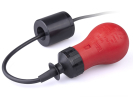
Float switches
A float switch converts the movement of the float when the level changes into an electrical state. With the cable version, the suspension and the space around the float are also important for the result. When choosing, it is therefore not enough to compare the lead length. First determine whether the tank is being filled, emptied or only signals that a limit has been reached, and describe the required states at the upper and lower level.
Version offered and working differential
In this category you will find, for example, EMAS SKF-0.5, SKF-5, SKF-10, SKF1A-1 and SKF1A-10. The manufacturer's SKF1A overview describes setting the working interval using a weight and different cable lengths. Always assign the specific length and version to the complete order code; do not transfer the data of the basic SKF1A to a variant with a different suffix.
The total cable length addresses the reach to the connection point. The free part between the fixing and the float is part of the movement geometry. It therefore cannot be assumed that a ten-metre lead means a ten-metre measuring range. Determine the switching levels from a correctly installed assembly and verify them in both directions of movement.
Why switching frequency matters
A small difference between switching on and off can lead to frequent repetition of cycles. Link the decision on the appropriate band to the tank volume, the actual inflow and the pumping capacity. In addition to the limit levels, also record the required minimum run time and permissible number of starts according to the drive documentation. This creates a verifiable design instead of adjustment based only on the operator's immediate impression.
Author's example: volume between levels
A model tank has a constant plan area of 0.60 m² and a level difference of 0.25 m between switching the pump on and off. The working volume is 0.60 × 0.25 = 0.15 m³, i.e. 150 litres. With a constant inflow of 10 l/min and pumping of 40 l/min, a net 30 l/min is removed during operation. Emptying the working volume takes 5 minutes; refilling with the pump switched off takes 15 minutes.
The ideal cycle therefore lasts 20 minutes, which corresponds to three starts per hour. The numbers are the author's, not permissible values for SKF floats or the pump. The calculation assumes constant flows and neglects start-up. In operation, compare it with a record of actual cycles and variable inflow.
Mounting and common mistakes
Reserve free space for the float without the possibility of catching on the wall, cables or suction pipe. Also consider the extreme state with waves and the filling stream. The fixing must not transfer tension to the electrical termination. Assess the cable joint and junction box separately; the designation of the float itself does not prove protection of the entire installation. After mounting, verify the contact change by actual movement, then the control function when the level changes.
Compare the electrical load with the documentation of the specific variant and the controlled circuit. The contact current is not universal approval for direct motor switching. For continuous stock measurement, follow on with Level sensors; a common overview is provided by Level sensors and probes.
FAQ
Can the contacts be wired by colour without a diagram?
Colours alone do not determine the required function. Use the diagram of the specific product and verify the state when filled and emptied.
Does a float replace complete pump protection?
A float provides one piece of operating information. Other necessary protections and responses to faults must be addressed by the design of the entire pumping installation.