Level sensors
Choose a level sensor according to the information the process is to obtain. Continuous filling height, calculated volume and confirmation that a limit has been reached are three different results. A tank may need continuous measurement for the operators and separate limit monitoring for fill control. When specifying, therefore, first determine the measured quantity, the reference point and the required response of the equipment. Only then compare the probe design and electrical interface.
Principle according to tank and medium
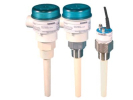
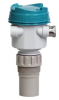
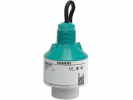
The public range includes, for example, IFM LR3000 and PS3208, Siemens SITRANS LR100 and the Liquiphant FTL51. vibrating switch. These are not interchangeable designs. The manufacturer designates LR3000 as a guided wave radar, consisting of an evaluation unit and a probe. For media with low permittivity, it requires the appropriate coaxial version. PS3208 is a hydrostatic submersible probe. With it, the properties of the liquid and the tank conditions must be taken into account when interpreting the pressure.
In the enquiry, write the composition and temperature of the medium, foam formation, deposits, agitation, pressure above the level and obstacles inside the vessel. Attach a sketch with the position of the filling stream and the required sensing point. Such documentation helps reveal an unsuitable measuring point before the finished pipework or lid has to be changed. The housing material alone does not describe all the parts that will be in contact with the contents.
Height is not automatically volume
To convert the level to litres, you need the tank geometry or a verified conversion table. Also determine whether the display zero corresponds to the bottom, the probe position or the lowest usable level. It is precisely this definition that belongs in the handover documentation; without it, the reading "fifty percent" may have a different meaning for the operators and the programmer.
Author's example: usable stock
Consider a tank with a constant plan area of 0.80 m². The measured level is 0.65 m above the bottom, but pumping is to stop at 0.15 m. The geometric volume of the liquid is 0.80 × 0.65 = 0.52 m³, i.e. 520 litres. The usable stock above the switch-off level is only 0.80 × (0.65 − 0.15) = 0.40 m³, i.e. 400 litres.
The difference of 120 litres is not a sensor error but the difference between two definitions of stock. The dimensions and limits are chosen for the example, not parameters of the product offered. The calculation does not apply unchanged to a horizontal cylinder, a conical bottom or a tank with significant internal fittings.
Mounting and verification of the result
Before installation, verify the requirements of the selected principle for clearances, probe length, seals and fixing. Prepare access for removal and cleaning. During commissioning, compare the reading with the actual level at several points and test both filling and emptying. Separately record the behaviour with an empty tank, after power is restored and on loss of signal. In the control settings, an invalid value must not look like a normal zero stock.
For simpler mechanical monitoring, compare Float switches. Other principles and related products are grouped in Level sensors and probes.
FAQ
Will a limit switch show the exact number of litres?
A binary state alone does not provide such information. For continuous volume, you need a continuous quantity and correct conversion according to the tank.
Is one test with a full tank enough?
It will not verify behaviour across the whole working range. Include the lowest usable level, normal operation and transitions between states that the control system actually uses.