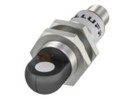
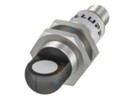
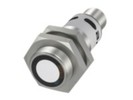
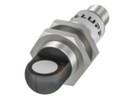
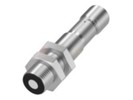
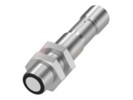
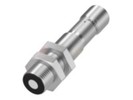
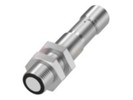
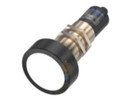
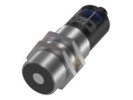
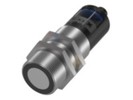
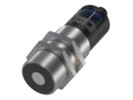
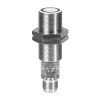
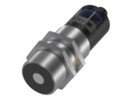
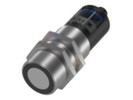
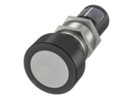
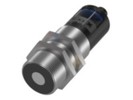
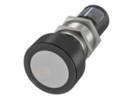
Cylindrical ultrasonic sensors in a threaded housing are used for non-contact object detection and distance measurement. Choose the M12, M18, M30 versions and other sizes according to the mounting space, working range and required signal to the control system. The thread size alone does not determine the range or type of output.
BUS003U Balluff: ultrasonic sensor M30E1, range 350–5 000 mm, 2× PNP. Overview of parameters, connection and suitable use at TECHNOLINE.
On request
268,87 €
excl. VAT · 325,33 € incl. VAT
Prices include the recycling fee.
Cylindrical ultrasonic sensors in a threaded housing are used for non-contact object detection and distance measurement. Choose the M12, M18, M30 versions and other sizes according to the mounting space, working range and required signal to the control system. The thread size alone does not determine the range or type of output.
Illustrative example of a design or application; verify the availability of the specific version on the product page.
How to choose an ultrasonic sensor M12, M18 or M30
First determine the nearest and farthest position of the object. The entire working path must lie within the usable measuring range of the specific sensor. With a conventional diffuse-mode version, leave space in front of the face for the blind zone. Teach-in sets the evaluation limits; it does not remove this physical limit.
Output and PLC connection
For presence detection or reaching a limit, choose the appropriate PNP or NPN switching output. For continuous distance, verify the analogue signal, for example 4–20 mA or 0–10 V, or the digital interface stated by the manufacturer. NO/NC function, hysteresis and window mode describe the evaluation method and are not a substitute for data on the electrical output.
Compare the housing length, thread, space behind the connector and position of the face.
Verify the supply, number of contacts and wiring diagram of the exact variant.
Take into account the size and inclination of the target, the detection diagram and the required response.
When installing several sensors, check the spacing and synchronisation support.
Typical use and verification in the machine
Cylindrical versions are used to check distance, stack height or roll diameter. Colour and transparency are not the main criterion for ultrasound; the return of the sound echo is decisive. Orient a smooth surface according to the manufacturer's instructions; an inclined or sound-absorbing target requires a practical test.
View LANBAO UR18-CM1DI-E2 as a specific example from the range. Verify the parameters of other variants separately.
Does a larger thread M30 automatically mean a longer range than M18?
The thread determines the mechanical design. Compare the range, blind zone and detection diagram in the datasheet of the specific model. When replacing, also check the body length and the space behind the connector.
Is a switching output enough for continuous distance measurement?
A switching output transmits a state when a set limit is reached. For a continuous value, you need a corresponding analogue signal or a digital interface supported by both the sensor and the control system. Teach-in sets limits within the usable range.
Cookies on this website
We need technical cookies for the cart and checkout to work — these are always used. Analytics cookies show us which pages people look for and where they get lost, and help us improve the shop. We only use them if you allow it. More in the data processing policy.
Cookie settings
Choose which cookies we may use. You can change your choice at any time.
Technical cookies
Always active
They keep the cart contents, your login and selected language, and protect forms from abuse. An order cannot be completed without them, so they are used even without consent.
Analytics cookies
Google Analytics shows us traffic and behaviour on the website in aggregated form. This tells us which pages are not working for people. We do not identify anyone from this data.