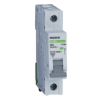
Ex9BN 1P B20, NOARK, miniature circuit breaker 1P B20, 20 A, 6 kA, 230 V AC
Ex9BN 1P B20 NOARK – miniature circuit breaker 1P B20, 20 A, 6 kA, 230 V AC. Key data: NOARK Ex9BN. Exact technical data for selecting the miniature circuit breaker type.
Rate 24,43 CZK per 1 EUR. Prices are indicative, invoicing is in Czech crowns.
NOARK Ex9BN and Ex9BH series miniature circuit breakers with B, C and D characteristics for protecting cables and loads. Auxiliary contacts are also available. Choose by rated current, number of poles, characteristic and breaking capacity.
Ex9BN 1P B20 NOARK – miniature circuit breaker 1P B20, 20 A, 6 kA, 230 V AC. Key data: NOARK Ex9BN. Exact technical data for selecting the miniature circuit breaker type.
Ex9BN 1P C20 NOARK – circuit breaker 1-pole, 20A, characteristic B, 6 kA, 1000999, 1P, 20 A. Key data: NOARK Ex9BN. Exact technical data for selecting the miniature circuit breaker type.
Ex9BN 1P B25 NOARK – circuit breaker 1-pole, 25A, characteristic B, 6 kA, 100010, 1P, 25 A. Key data: NOARK Ex9BN. Exact technical data for selecting the miniature circuit breaker type.
Ex9BN 1P B2 NOARK – circuit breaker 1-pole, 2A, characteristic B, 6 kA, 100001, 1P, 2 A. Key data: NOARK Ex9BN. Exact technical data for selecting the miniature circuit breaker type.
Ex9BN 1P C2 NOARK – circuit breaker 1-pole, 2A, characteristic C, 6 kA, 100091, 1P, 2 A. Key data: NOARK Ex9BN. Exact technical data for selecting the miniature circuit breaker type.
Ex9BN 1P B32 NOARK – circuit breaker 1-pole, 32A, characteristic B, 6 kA, 100011, 1P, 32 A. Key data: NOARK Ex9BN. Exact technical data for selecting the miniature circuit breaker type.
AX3111 Sigma Elektrik – NOARK, auxiliary changeover contact for circuit breakers type Ex9BN, 100540. Exact technical data for selecting the miniature circuit breaker type.
Ex9BN 1P B6, NOARK, miniature circuit breaker 1P, 6A, characteristic B, 6kA. Miniature circuit breaker Ex9BN protects single-phase or three-phase branches according to the number of poles 1P.
Ex9BN 1P B10, NOARK: miniature circuit breaker 1P, 10A, characteristic B; breaking capacity Icn 6kA according to EN 60898-1.
Ex9BN 1P B16, NOARK, miniature circuit breaker 1P, 16A, characteristic B, Icn 6kA. Single-pole circuit breaker Ex9BN with characteristic B and current 16A for protecting AC circuits against overload…
Ex9BN 1P C6, NOARK: miniature circuit breaker 1P, 6A, characteristic C; breaking capacity Icn 6kA according to EN 60898-1.
Ex9BN 1P C10, NOARK: miniature circuit breaker 1P, 10A, characteristic C; breaking capacity Icn 6kA according to EN 60898-1.
Ex9BN 1P C16 NOARK – circuit breaker 1-pole, 16A, characteristic C, 6 kA, 100098, 16 A. Key data: NOARK Ex9BN. Exact technical data for selecting the miniature circuit breaker type.
Ex9BN 1P B1, NOARK, miniature circuit breaker 1P, 1A, characteristic B, Icn 6kA. Single-pole circuit breaker Ex9BN with characteristic B and current 1A for protecting AC circuits against overload and…
Ex9BN 1P B4 NOARK – circuit breaker 1-pole, 4A, characteristic B, 6 kA, 100003, 1P, 4 A. Key data: NOARK Ex9BN. Exact technical data for selecting the miniature circuit breaker type.
Ex9BN 1P C4 NOARK – circuit breaker 1-pole, 4A, characteristic C, 6 kA, 100093, 1P, 4 A. Key data: NOARK Ex9BN. Exact technical data for selecting the miniature circuit breaker type.
Ex9BN 1P C1 NOARK – circuit breaker, 100090, 1 A, C, 6 kA. Key data: NOARK Ex9BN, 1A. Exact technical data for selecting the miniature circuit breaker type.
Ex9BN 2P C4, NOARK: miniature circuit breaker 2P, 4A, characteristic C; breaking capacity Icn 6kA according to EN 60898-1.
Ex9BN 3P B16, NOARK, miniature circuit breaker 3P, 16A, characteristic B, 6kA. Miniature circuit breaker Ex9BN protects single-phase or three-phase branches according to the number of poles 3P.
Ex9BN 3P B10 NOARK – circuit breaker 3-pole, 10A, characteristic B, 6 kA, 100051, 3P, 10 A. Key data: NOARK Ex9BN. Exact technical data for selecting the miniature circuit breaker type.
Ex9BN 3P B32 NOARK – circuit breaker 3-pole, 32A, characteristic B, 6 kA, 100056, 3P, 32 A. Key data: NOARK Ex9BN. Exact technical data for selecting the miniature circuit breaker type.
Ex9BN 3P B6 NOARK – circuit breaker 3-pole, 6A, characteristic B, 6 kA, 100049, 3P, 6 A. Key data: NOARK Ex9BN. Exact technical data for selecting the miniature circuit breaker type.
Ex9BN 3P C10, NOARK: miniature circuit breaker 3P, 10A, characteristic C; breaking capacity Icn 6kA according to EN 60898-1.
Ex9BN 3P C32 NOARK – circuit breaker 3-pole, 32A, characteristic C, 6 kA, 100146, 3P, 32 A. Key data: NOARK Ex9BN. Exact technical data for selecting the miniature circuit breaker type.
Ex9BN 3P C16 NOARK – circuit breaker 3-pole, 16A, characteristic C, 6 kA, 100143, 3P, 16 A. Key data: NOARK Ex9BN. Exact technical data for selecting the miniature circuit breaker type.
Prices include the recycling fee.
The category includes miniature circuit breakers Ex9BN and auxiliary contact AX3111. When ordering, distinguish the protective device from the signalling accessory. The range includes single-pole, two-pole and three-pole variants. The selection starts with the required function of the circuit; the same toggle appearance or a similar designation is not sufficient documentation for a replacement.
A circuit breaker protects against overcurrent. With overload, both the magnitude of the current and its duration matter; with a high short-circuit current, fast tripping applies. The characteristic is therefore not a single tripping time. NOARK documentation Ex9BN states Icn 6 kA and separate B and C curves. Icn expresses the short-circuit breaking capacity, not the permissible continuous consumption.
For comparison, prepare the rated current, characteristic, number of poles and voltage. Separate steady-state operation from the short start-up of the equipment. The record “trips at start” needs to be supplemented with the duration and magnitude of the current event; a mere average over a shift may hide the decisive peak. Assessment of short-circuit conditions belongs to the professional design.
Read the current figure and the characteristic letter as two different pieces of information. A higher current value is not automatically a suitable fix for nuisance tripping. The cause must be known first. When replacing, compare the complete rating plate of the original device with the new one, not just the series name in the order.
Compare the number of poles with the function of the whole device. When comparing working poles, do not use the number of modules as a substitute value. For a multi-pole version, verify the documented common operation and protective functions of the individual poles. Replacement with several separate pieces cannot be justified simply by adding up their widths. Also check the coordination with other protection and the required behaviour in the event of a fault.
NOARK AX3111 has one changeover auxiliary contact; the manufacturer does not state a fault signalling contact for it. Therefore do not regard position information as separate confirmation of a short circuit. In the specification, distinguish between a position signal, a fault report and a trip command.
Ex9BN is designed for a 35 mm device rail. When preparing the control cabinet, verify the space for accessories, covers, access to the operator and heat dissipation. The handover should include legible marking of the outgoing circuits and documentation of the actual fitting. The specific installation, connection and verification of the protective conditions must be carried out by a qualified person according to the device documentation and the design.
Record which device tripped, what was running at the time and whether the event was preceded by a change in technology. Distinguish a trip immediately after start-up from a trip after longer operation. These circumstances determine further measurements, but do not prove the cause by themselves. Repeated resetting without investigating the fault does not replace diagnostics. A time record, a photo of the rating plate and a list of loads operating at the same time will help the service.
In our own model, consider a current event of 24 A lasting 80 ms and a hypothetical circuit breaker with a rated current of 6 A. The multiple is 24 / 6 = 4, the time 80 / 1000 = 0.08 s. These two coordinates can be compared with the relevant time characteristic. The figures are a teaching brief, not a measured state or recommended protection. The calculation alone does not determine the tripping result; it needs a specific curve, its tolerance band and conditions of use.
Only after assessing the cause and protective conditions. Changing the characteristic is not a universal service procedure and must correspond to the specific design.
No. Overcurrent and residual current protection monitor different fault conditions. The installation design determines the required combination.
The context of the range can be found in the category Circuit breakers and RCDs. For residual current protection, continue to NOARK residual current devices.
We need technical cookies for the cart and checkout to work — these are always used. Analytics cookies show us which pages people look for and where they get lost, and help us improve the shop. We only use them if you allow it. More in the data processing policy.
Choose which cookies we may use. You can change your choice at any time.
They keep the cart contents, your login and selected language, and protect forms from abuse. An order cannot be completed without them, so they are used even without consent.
Google Analytics shows us traffic and behaviour on the website in aggregated form. This tells us which pages are not working for people. We do not identify anyone from this data.