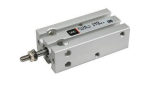
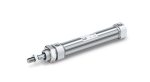
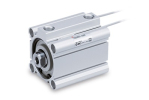
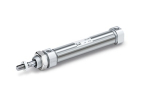
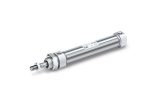
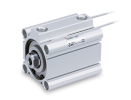
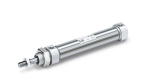
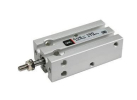
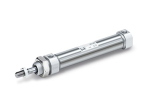
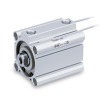
Round pneumatic cylinder CD85N25-40-B, diameter 25mm, stroke 40 mm, magnet, SMC
Round pneumatic cylinder CD85N25-40C-B, diameter 25mm, stroke 40 mm, magnet, elastomer cushioning, band-mounted sensors
Rate 24,43 CZK per 1 EUR. Prices are indicative, invoicing is in Czech crowns.
SMC and Festo pneumatic cylinders – ISO, compact, miniature, round, guided and rodless. Choose by bore, stroke, required force, mounting and position sensing.
Round pneumatic cylinder CD85N25-40C-B, diameter 25mm, stroke 40 mm, magnet, elastomer cushioning, band-mounted sensors
CD85N12-200-B, SMC, ISO cylinder, diameter 12 mm, stroke 200 mm. A pneumatic cylinder converts the energy of compressed air into linear motion.
CUK6-10D, compact cylinder, double-acting, non-rotating piston rod, SMC
CD85F16-165-B, SMC, round cylinder, diameter 16 mm, stroke 165 mm. A pneumatic cylinder converts the energy of compressed air into linear motion.
CDQ2A25-45DMZ, SMC, compact cylinder, double-acting, single-end rod, diameter 25 mm, stroke 45 mm. A compact cylinder creates linear pneumatic motion with a short installation length.
CD85N25-70-B, SMC, round cylinder ISO6432, double-acting, diameter 25 mm, stroke 70 mm. A pneumatic cylinder converts the energy of compressed air into linear motion.
CD85N12-280-A-X2018, SMC, round cylinder, double-acting, single-end rod, diameter 12 mm, stroke 280 mm. A pneumatic cylinder converts the energy of compressed air into linear motion.
CD85N25-160-B, SMC, round pneumatic cylinder, diameter 25 mm, stroke 160 mm, magnet. A pneumatic cylinder converts the energy of compressed air into linear motion.
CD85N16-25-A, SMC, round cylinder, diameter 16 mm, stroke 25 mm. A pneumatic cylinder converts the energy of compressed air into linear motion.
CDQ2WA12-30DZ, SMC, compact cylinder, diameter 12 mm, stroke 30 mm, magnet, double-end rod. A compact cylinder creates linear pneumatic motion with a short installation length.
Compact double-acting cylinder with guide rods, magnet, diameter 16mm, stroke 10mm, elastomer cushioning
CDQ2A25-40DCMZ, SMC, compact cylinder, double-acting, single-end rod, diameter 25 mm, stroke 40 mm. A compact cylinder creates linear pneumatic motion with a short installation length.
CD85KN16-50-B, SMC, round cylinder, ISO 6432, double-acting, non-rotating single-end rod, diameter 16 mm, stroke 50 mm. A pneumatic cylinder converts the energy of compressed air into linear motion.
CDU6-10D, compact cylinder, double-acting, SMC
CD85N20-50C-B, SMC, round pneumatic cylinder, diameter 20 mm, stroke 50 mm, magnet. A pneumatic cylinder converts the energy of compressed air into linear motion.
CD85RAF16-100-B, SMC, pneumatic cylinder, double-acting, single-end rod, diameter 16 mm, stroke 100 mm. A pneumatic cylinder converts the energy of compressed air into linear motion.
CD55B20-20M, compact cylinder, double-acting, single-end rod, SMC
ADN-16-40-I-P-A, Festo, 536232, compact cylinder. The air preparation element filters, regulates or otherwise prepares the compressed air for the pneumatic system.
CD55B25-20M, SMC, compact cylinder, double-acting, single-end rod, diameter 25 mm, stroke 20 mm. A pneumatic cylinder converts the energy of compressed air into linear motion.
CD85N16-25C-B, SMC, pneumatic cylinder diameter 16 mm, stroke 25 mm, magnet. A pneumatic cylinder converts the energy of compressed air into linear motion.
CD85N20-100C-B, SMC, pneumatic cylinder, double-acting, diameter 20 mm, stroke 100 mm, magnet. A pneumatic cylinder converts the energy of compressed air into linear motion.
TP96SDB32-20C, SMC, pneumatic cylinder, cylinder diameter 32 mm, stroke 20 mm, ISO15552. A pneumatic cylinder converts the energy of compressed air into linear motion.
CDQ2B32-40DZ, SMC, compact cylinder, double-acting, single-end rod, diameter 32 mm, stroke 40 mm. A compact cylinder creates linear pneumatic motion with a short installation length.
TP96SDB32-25C, SMC, pneumatic cylinder, cylinder diameter 32 mm, stroke 25 mm, ISO15552. A pneumatic cylinder converts the energy of compressed air into linear motion.
TP96SDB32-30C, SMC, pneumatic cylinder, cylinder diameter 32 mm, stroke 30 mm, ISO15552. A pneumatic cylinder converts the energy of compressed air into linear motion.
Prices include the recycling fee.
A pneumatic cylinder converts the energy of compressed air into linear motion. It moves a part, presses a tool or operates a mechanism. The range includes, for example, the SMC CJP, CQ2, CQS, CD85, JCQ, MGP and MY1 series as well as Festo cylinders. In addition to actuators, there are GKM clevises and KJ rod ends; when ordering, therefore, distinguish the cylinder itself from its accessories.
Pressure acts on the effective area of the piston. In a double-acting cylinder, air is supplied alternately to both chambers and the opposite chamber is exhausted. A single-end rod reduces the area for retracting, so at the same overpressure the theoretical force is lower than when extending. This difference is also shown by SMC force table C95.
In the single-acting version with a return spring, air provides the working movement and the spring the return. When extending, its resistance must also be overcome. The design is illustrated by SMC CJP manual. Single-acting and double-acting versions therefore require a different assessment of the working and return movement.
First determine the required stroke, the direction of load and the force during the whole cycle. Then compare the diameter, permissible pressure, speed and temperature of the specific version. Check the dimensions in the retracted and extended position, the body mounting, the piston rod end and the space for connection. It is not enough to select only the same diameter and stroke.
A lateral load requires a separate assessment of the guide. For example, SMC MGP connects the cylinder with a guide structure. The force in the axis of movement is not the same as the permissible load on the guide. When replacing, compare the full order code and drawing; a similar series designation does not guarantee an identical version.
For an enquiry, prepare a description of the working cycle: what moves, from where to where, with what load and how often. For a replacement, add a photo of the nameplate and mounting. Write down the required properties and data not yet verified separately; this makes checking the offered version easier.
Let us consider a fictitious double-acting cylinder with a piston diameter D = 30 mm, a piston rod d = 12 mm and an overpressure p = 0.45 MPa. In the model, the opposite chamber has zero overpressure; we neglect friction and dynamics. Since 1 MPa = 1 N/mm², the area for extending A = πD²/4 is 706.9 mm² and the force F = pA approximately 318.1 N. For retracting, A = π(D² − d²)/4 = 593.8 mm² and F approximately 267.2 N.
The difference is 50.9 N. This is our own tutorial model, which does not define product selection or a guaranteed force. An actual design must take into account back pressure, friction, load and an operating reserve.
Before intervention, secure the load, disconnect the energy supplies and release residual pressure. Align the cylinder axis with the guide of the mechanism and verify free movement over the whole stroke. Protect the piston rod from scratches and the fittings from dirt. Set the speed gradually from a low value; also verify the permissible end-of-stroke energy. The procedure is detailed in SMC manual CQ2.
In case of jerking or loss of force, check the pressure during operation, the patency of the supply, the speed setting, leaks and alignment. Compare the change in cycle time with the original state. Increasing pressure without finding the cause can mask a mechanical problem. In case of hard end-of-stroke impact, assess speed and load; separate shock absorbers select according to the specific energy requirement.
No. It is the ideal result of pressure and area; the actual movement is also affected by back pressure and mechanical resistance.
Verify compatibility for the specific cylinder, its equipment and mounting method. The range can be found among with magnetic sensors; the similarity of the slot alone is not enough.
We need technical cookies for the cart and checkout to work — these are always used. Analytics cookies show us which pages people look for and where they get lost, and help us improve the shop. We only use them if you allow it. More in the data processing policy.
Choose which cookies we may use. You can change your choice at any time.
They keep the cart contents, your login and selected language, and protect forms from abuse. An order cannot be completed without them, so they are used even without consent.
Google Analytics shows us traffic and behaviour on the website in aggregated form. This tells us which pages are not working for people. We do not identify anyone from this data.