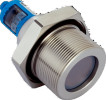
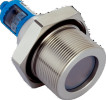
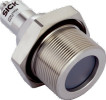
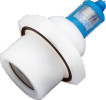
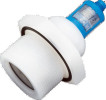
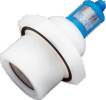
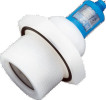
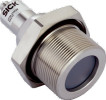
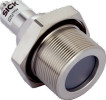
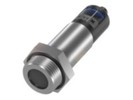
Ultrasonic level sensors measure the distance from the transducer to the surface of the medium without direct contact with the level. This group includes devices explicitly intended by the manufacturer for level measurement in tanks and silos. Always assess suitability for liquids or bulk solids according to the specific medium and version.
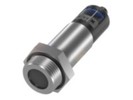
BUS005U Balluff: ultrasonic sensor for process applications M30E2, range 200–5 000 mm, 2× PNP. Overview of parameters, connection and suitable use at TECHNOLINE.
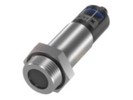
BUS005W Balluff: ultrasonic sensor for process applications M30E2, range 200–5 000 mm, 0–10V / 4–20mA + PNP. Overview of parameters, connection and suitable use.
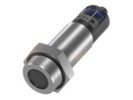
BUS005Y Balluff: ultrasonic sensor for process applications M30E2, range 85–1 500 mm, 0–10V / 4–20mA + PNP. Overview of parameters, connection and suitable use.
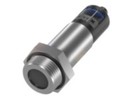
BUS0085 Balluff: ultrasonic sensor for process applications M30E2, range 85–1 500 mm, 0–10V / 4–20mA + PNP. Overview of parameters, connection and suitable use.
BUS0086 Balluff: ultrasonic sensor for process applications M30E2, range 200–5 000 mm, 0–10V / 4–20mA + PNP. Overview of parameters, connection and suitable use.
On request
422,55 €
excl. VAT · 511,29 € incl. VAT
Prices include the recycling fee.
Ultrasonic level sensors measure the distance from the transducer to the surface of the medium without direct contact with the level. This group includes devices explicitly intended by the manufacturer for level measurement in tanks and silos. Always assess suitability for liquids or bulk solids according to the specific medium and version.
Illustrative example of a design or application; verify the availability of the specific version on the product page.
BALLUFF M30E2 process level sensors
The BUS M30E2 series is explicitly intended by the manufacturer for non-contact level measurement in tanks. Assess the G 1 process connection and the design of the active face together with the medium, pressure and required sealing method. The maximum range may not be identical to the recommended working range; the datasheet of the specific variant is decisive.
A level meter evaluates the return of the ultrasonic echo. The level height is determined from the measured distance and the specified geometry. For continuous measurement, verify the corresponding analogue or digital output; a switching output signals that a set limit has been reached. Conversion to volume requires knowledge of the vessel shape.
Range, blind zone and location
With an empty tank, the surface must still be within range, and when full it must remain outside the blind zone. Allow a reserve for waves. Choose the sensor position with regard to walls, stiffeners, agitators and the filling stream, which can create unwanted reflections or obstruct the measuring path.
State the medium, minimum and maximum level and the dimensions of the vessel.
Verify the pressure, temperature, face material and process connection.
Assess foam, condensation, deposits and air flow above the level.
Compare the output, supply and behaviour on loss of echo.
When to carry out an application test
Foam can attenuate the ultrasonic signal; a changing environment affects sound propagation. Therefore also test filling, emptying and agitation. For bulk solids, take into account the uneven surface and the pouring cone. The degree of protection of the housing alone does not confirm chemical resistance or usability in a pressure vessel.
Can an ordinary cylindrical sensor be used for level?
In some applications yes, if it corresponds to the documentation and operating conditions. However, the mere ability to sense a liquid surface does not make an ordinary sensor a process level meter. Assess the design and the manufacturer's explicit intended use together.
How is the level height determined from the measured distance?
The level height is the difference between the known distance of the face from the reference bottom and the currently measured distance to the surface. Conversion to volume requires the vessel geometry; the highest level must remain outside the blind zone.
Do all BALLUFF M30E2 sensors provide a continuous analogue signal?
No. For example, BUS005U has two PNP switching outputs for limit states. For continuous measurement, compare the analogue variants BUS005W, BUS005Y, BUS0085 or BUS0086 and their specific range.
Cookies on this website
We need technical cookies for the cart and checkout to work — these are always used. Analytics cookies show us which pages people look for and where they get lost, and help us improve the shop. We only use them if you allow it. More in the data processing policy.
Cookie settings
Choose which cookies we may use. You can change your choice at any time.
Technical cookies
Always active
They keep the cart contents, your login and selected language, and protect forms from abuse. An order cannot be completed without them, so they are used even without consent.
Analytics cookies
Google Analytics shows us traffic and behaviour on the website in aggregated form. This tells us which pages are not working for people. We do not identify anyone from this data.